

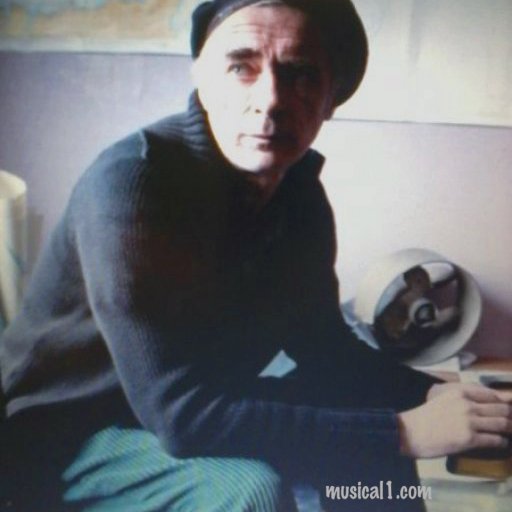
@michael-marra
Read Full Biography


A new 'Listener' Member section has been added to the website!
Members will be able to appreciate Full-Length Audio and Video Tracks as well as access Downloads, post Comments and Reviews, and a whole lot more!
Click here to Sign-Up as a Listener
As a 'Listener' Member, you will also get (For Free)...
10MB Micro Bandsite with built-in...
Blog
Photo Gallery
Radio section, where you can make up your own Online Radio Streams
AND...
Private Messaging Facility
Shopping Cart Facility
Favorite Songs compiler...
... and other such goodies!
[img]http://www.musical1.com/image.php?band_id=1&image_id=204&mode=photo_image&height=128[/img] Bard attitude: Michael Marra in trademark beret. The Dundonian, who is supporting Van Morrison and touring with Liz Lochhead, has 'the best job in the world', although he has a fatherly concern for his children, Alice and Matthew, in the Hazey Janes Photograph by Robert Perry Read Chitra Ramaswamy's piece from Scotland on Sunday dated 21/05/06
[img]http://www.musical1.com/image.php?band_id=1&image_id=204&mode=photo_image&height=128[/img] Photograph by Robert Perry Guilty secrets from the nation's gravelly voice CHITRA RAMASWAMY MICHAEL Marra recently wrote a song about Shirley McKie. The Dundonian songwriter, poet, musician and actor was advising a student doing a degree in political song about how to channel anger into poetry when it occurred to him that the McKie case had made him "angry" and "upset" and he hadn't done anything about it. When he was in the United States last month performing with Liz Lochhead as part of Tartan Week, Marra had his fingerprints taken in Washington. "I'm not a troublemaker but I just didn't like it," he says, in a rolling growl that sounds as though it's been filtered through a funnel of cigarette smoke. "Then it struck me - I didn't do anything for Shirley McKie. I felt guilty. I admired the woman because she just kept telling the truth. I did it in one full shift overnight and I started the chorus..." he stops and his voice becomes even more gravelly as he recites quietly. "I am Shirley McKie/ She is me and I am she/ You are too, and Shirley is you/ We are she because Shirley is we." He falters, suddenly shy, and mumbles that the rest of the writing experience was a blur. This month Marra is supporting Van Morrison at Perth's Festival of the Arts. It's all in a day's work for this gentle man who is often referred to as the Scottish Tom Waits. In the past 30-odd years he has worked with Lochhead, Barbara Dickson and John Byrne and been covered by the likes of Hue and Cry, Kiki Dee and June Tabor. Marra has retained best-kept-secret status, despite being hailed as Scotland's greatest living songwriter and releasing 11 albums. But that's how he likes it: "I didn't know what Burt Bacharach looked like until I was in my 20s. I liked that - songwriters were names in brackets. I would have liked to be invisible and have everyone else doing my stuff." Invisibility may be a peculiar wish for someone in show business, but Marra has always wanted to have it his own way, shutting himself up in his studio at home and shunning the industry to work with his brother and local artists, producers and labels. He was signed to Polydor early in his career in London only to flee back to Dundee when they tried to tone down his Scottishness. Leaving all that behind requires a doggedness, he says, that is very Dundonian in spirit. Marra played a gig with Morrison, a couple of years back, at Stirling Castle, and he's been a fan ever since he heard Astral Weeks in Blairgowrie in the 1960s. "I love him," he says. "I think he's one of the great examples of what you can do with a guitar and three chords. The great ones are simple. I try to be too clever, you know." MARRA ARRIVES at the DCA cafe in Dundee from the home he shares with his wife of 34 years, Peggy, in Newtyre, a small village "20 minutes away on the bus". He's a willowy man, his only robust feature being a set of wiry, creature-like eyebrows that shift around on his wrinkled forehead, his beady eyes lurking beneath. He's sporting a rucksack full of CDs, papers and books, as well as his trusty black beret that he is rarely seen without. "It's the only remaining one and it's been on my head a very long time," he says. He has spent the morning worrying about this interview. "I hadn't met you before," he says, by way of explanation. Marra's children, Alice and Matthew, are following in his footsteps, forming the Hazey Janes and releasing their debut album, Hotel Radio, earlier this year on a small label. Surely its traditional folk meets Americana sound is influenced by their father? "It's got nothing to do with me," he says. "I fear for bairns in show business, you must be protected from it." But when he talks about performing with them, his face lights up. Marra recalls performing with Patti Smith at Ayr's Burns An' A' That! festival. Both Scots bard and punk poet were nervous. "Neither of us had ever done anything with a full orchestra before," he says. With the RSNO giving them the jitters, Smith dragged Marra away for an impromptu practice run; she had written her own music for Burns' 'Afton Water', to which Marra was playing guitar, and she wanted to sing it to him. "She whispered it into my ear," says Marra, "and it was beautiful." He has lots of stories like this, small moments in which the ordinary becomes strange and rather wonderful. Like the time when he told a school friend in the playground that he wanted to be a songwriter and it turned out his friend's uncle was Stephen Sondheim. Many of these incidents find their way into Marra's surreal songs, which see Frida Kahlo sinking a few at the Tay Bridge Bar and King Kong invading Glasgow. Marra will be performing with Glasgow's poet laureate Liz Lochhead at Edinburgh's Festival of Scottish Writing this month with In Flagrant Delicht. Marra's piano and guitar accompanying Lochhead's poems, as well as singing his own songs, makes for a winning partnership that has lasted 10 years and taken them all over the world. Next stop is Melbourne later this year. "Normally when I'm touring it's just me and a keyboard, guitar and two bags," he says. "If I'm with Liz, it's a completely different way of seeing things. She has a sense of humour, I think it would be fair to say, and a nifty turn of phrase." He also recently acted in Alison Peebles' Home production in Aberdeen for the National Theatre of Scotland. Peebles contacted him to say that writer Rona Munro had created a monologue for him. "It was a piece about a fisherman who's in this flat in Aberdeen comparing his life to the life of a cod," Marra says. It is easy to see why Munro thought of Marra, with his weather-beaten skin, air of solitude and, of course, that voice. When he's not acting and performing, Marra is working on a new album. It has no name as yet - "I should give it one and it might become more believable" - but some of the songs are starting to take shape. He finds the process of songwriting agonising though, and says it's "like drawing up huge lists of choices and panicking my way into one of them". When Marra wrote Nan Garland, an opera for Dundee Rep, a couple of years ago, he had his head down for nine months straight and in the end Peggy ordered him to go out and see people. "'Go and eat where the humans eat,' she said. I was lost, in the forest, immersed in it. That's a wonderful thing though - it's the best job in the world." Copyright Scotland On Sunday 2006
Peerie Willie Johnson, the legendary Shetland musician and guitarist, died 22 May 2007 aged 86. By way of a tribute here are the lyrics to Michael's song about William Henry Johnson. The song has now been recorded by Michael and is the opening track on his new "Quintet" CD now available at the store.
"Schenectady Calling Peerie Willie Johnson"
Schenectady calling Schenectady calling
Take these notes into the night
And run then by the Northern Lights
Transport these golden bars
Let this music touch the stars
And snuggle down into the noost
Whaur Peerie Wille makes his hoose
And let his music run through his fingers
Let it touch his very soul
Schenactady calling Schenactady calling
And let the cymbals tingle in a distant ear
And the signal twinkle by the Bressay Pier
In that long dark night let Eddie Lang be near
This sophisticated man
And so to Willie Harlem speaks
His fingers painting what his soul recieves
Blessed Django comes to call
Smashing down those foolish walls
The signal flies into the night
And flashes by the Lerwick lights
A nice explosion runs through his fingers
And ignites his very soul
Schenectady calling Schenectady Calling
We love you madly
Schenetady calling
Lyrics - Copyright Michael Marra
We have also made available in the Audio Section a couple of recordings of Michael singing "Schenectady Calling Peerie Willie Johnson".The first featuring Dundee poet Don Patterson on guitar, the second has Steve Ketley from the the Cauld Blast Orchestra on saxophone. Here is Michael performing his song -
Appreciation: Willie Johnson
Wednesday May 30 Scotsman, The
By Alastair Clark
"PEERIE" WILLIE JOHNSON Guitarist
Born: December, 1920, in Hella, Shetland. Died: 23 May, 2007, in Lerwick, Shetland, aged 86.
WE HAVE had two great Willie Johnsons of seminal importance in traditional music. There was "Blind" Willie Johnson, a black blues singer born in Texas at the start of the 20th century, and there was "Peerie" Willie Johnson, born some 20 years later on the island of Yell. They had at least a couple of qualities in common: both were stunning guitarists, and both liked a good drink under their belt.
If "Blind" Willie's music was hugely influential in the spectacular explosion of the blues in the Thirties and Forties, "Peerie" Willie's was equally so in the pulsating, burgeoning bloom of traditional Shetland music and beyond from the Fifties until the present day.
"Peerie" Willie did the unthinkable: he brought jazz into folk music. The chords he learned as he huddled over the sounds of America, first from Joe Venuti and Eddie Lang, and later from Django Reinhardt and Stephane Grappelli, Charlie Parker, Dizzy Gillespie and Coleman Hawkins, have found their way into just about every folk band playing in Scotland today.
Johnson's father, a seaman, died when Willie was seven and was buried in Jamaica. Johnson was a sickly child whose education was severely hampered by absence from school, scarlet fever being just one of the reasons. His mother, after moving to Lerwick and recognising a bit of music in him, bought him a ukulele, and he was playing it nicely within months. The guitar followed, and the sick child was soon showing signs of not really needing a high school education.
But it was Venuti, swinging American fiddler, and Lang, propulsive rhythm guitarist, who kick-started his musical journey. Johnson, as a young man, would join Tom Anderson, who knew a thing or two about radio, having built some of the first radios in the Shetlands, for jazz sessions broadcast from Schenectady, in New York State, and picked up via the American Forces Network.
Venuti and Lang were a revelation, with so much going on behind an often simple theme. There were LP records too, of course, and Johnson, who never learned to read music but also became a proficient jazz pianist, would, according to his Shetland contemporary Billy Kay, "just listen endlessly, over and over again, to those jazz records".
Johnson, blessed with a huge mop of hair that stuck in there until the day he died, as well as a marvellous ear for music, was soon playing fluent, swinging jazz, revelling in what were then regarded as crazy chord changes. When he and Anderson, best known for his traditional music on fiddle, but a bit of a swinger in his younger years, began to concentrate on Shetland's music, Johnson was reluctant to kick his jazz-chord habit. "I had to keep it very basic at first with Tom," he once told me. "Nothing fancy, because he wanted it that way. In any case, you can't put a lot of thirteenths and flattened fifths into Shetland reels - it takes away from it, in my opinion. But later on, especially when we went to America, I started doing a lot of flattened-fifth things, and Tom came round eventually."
I remember telling him that the old Dixieland man Eddie Condon had said: "We don't flatten our fifths - we drink 'em."
"Well," he replied. "That makes me a damn sight luckier than Eddie Condon, because I flatten my fifths and drink 'em too."
As well his fruitful musical relationship with Anderson - the two went on a vast tour of the United States with the Boys of the Lough in 1979 and got to play at the very hall from which those scratchy sounds had come way back in the Thirties: in Schenectady - Johnson also played and toured with another fine Shetland fiddler, Willie Hunter. He was a favourite accompanist of Aly Bain, who told me on news of his death: "Up there in Shetland and anywhere else, they will never see his like again."
Perhaps the best thing Bain and Johnson did together was a version of Patrick Shuldam-Shaw's Margaret's Waltz, on Bain's first solo album in 1984. Johnson's probing, invigorating guitar pushes Bain to extraordinary heights of sheer, irresistible musical joy. The comedian Billy Connolly was one among many who told Bain it had "No 1 hit" written all over it, but Bain somehow didn't think it would stand up in the pop charts.
In approaching this piece, I suddenly realised that I knew "Peerie" Willie only as a lovely man and a remarkable musician. It turns out, according to Billy Kay, that's precisely what he was. He never had any other kind of career; he took a variety of jobs in Shetland, but never stayed long in them. He simply wanted to play music, that's all.
During the Second World War, he was assigned to the RAF and posted first to Sumburgh and then to Sullom Voe (long before the oil arrived).
Shetland was seen as a vulnerable point, with Hitler already in Norway. So a huge body of troops was sent up, at one point numbering some 30,000.
The War Office dispatched top musicians to entertain our boys, and Johnson was there to greet them and play fabulous guitar with them. They were suitably impressed, and tried to persuade him to head for London when the war was over. There were so many dance bands just itching to have that Willie Johnson guitar rhythm behind them. When the time came, Johnson did a few gigs down south, failed to show up for a lot more, and headed back to Shetland.
Sure, there was glory. There were tours, big-time concerts and TV shows with Bain, festivals in the US and Scandinavia, but, somehow, he always seemed happiest at his customary old crouch over the guitar at the Lounge, in Lerwick.
He was the most modest of hugely gifted, music-changing musicians.
His wife, Ethel, predeceased him. They had no children.
(c) 2007 Scotsman, The. All rights Reserved.

The Sunday Herald's Barry Didcock's piece on Michael published on 15 January 2006
Michael Marra may be reluctant to play the fame game but his music has captured a piece of Scotlands heart By Barry Didcock TO writer Liz Lochhead, hes the wee shilpit skinny guy from Dundee who for over a decade has partnered her in the stage show In Flagrant Delicht. To Dundonians, hes the troubador poet who has sculpted from the rhythms and accents of their city a songbook so comprehensive it should be required listening for anyone venturing over the Tay Bridge. To football fans hes the author of Hamish The Goalie, an ode in song to Hamish McAlpine, the legendary Dundee United stopper. And to connoiseurs of Scottish music he shares best kept secret status with people like Bert Jansch and Davy Graham. But when the man himself looks in the mirror and studies the weathered 53-year-old face looking back at him, he sees only Michael Marra, songwriter a man who would never leave his studio if he didnt have to. Today, however, he does. Today Michael Marra has to catch the bus from Newtyre, the village outside Dundee in which he lives with his wife Peggy, and meet me. Hes passed the time by reading a novel, Everything Is Illuminated by Jonathan Safran Foer hell pull the dog-eared paperback out of his knapsack later to show me, talking excitedly about it as he does and when he ambles into the caf at Dundee Contemporary Arts he apologises for being late. He neednt; he isnt. But politeness is a reflex with him. Weve met before actually, eight years ago, up the road at Dundee Repertory Theatre where he was working on a production of The Mill Lavvies, Chris Rattrays musical play about the jute bit of Dundees famous troika of trades. Marra had written the songs for it and was also in it. He wants to meet at the Rep again but Im keen to see him in the DCA, a building as emblematic of the new Dundee as the jute, jam and journalism tag is redolent of the old one. In fact, he looks perfectly at home here and hasnt a bad word to say about the place. With his loose-fitting jacket, his haversack of books and his beret pushed back on his head so the leather band shows he could be a visiting artist or a hip punter. Its going to be a busy year for Michael Marra. Hes currently working on a new album and he has a series of tour dates arranged for early spring. But more immediately, he has a raft of Celtic Connections appearances to negotiate. On January 26, he performs The Ballad Of Sam McGee, composer Christine Hansons setting of Robert Services poem The Cremation Of Sam McGee. Marra, with his deep, sonorous voice, narrates the story, an amiable piece of nonsense about a gold-panner from Tennessee who meets his end in the frozen wastes of the Yukon. And this weekend, he and Liz Lochhead team up again for two performances of In Flagrant Delicht at the Tron Theatre. In Flagrant Delicht was a seriously constructed show to begin with. The structure remains the same but things change within it, he explains. Sometimes theres music, sometimes its just dialogue. Its an interesting show. People like it and it means I get to see Liz Lochhead regularly because I hardly see anybody at all. I do my gigs and I go straight home. I dont socialise very much . He is not one for networking. He pulls a face, as if someone has wafted something unpleasant under his nose. I dont like that word, he says. Its horrible. Ugly. He doesnt like what he refers to as showbusiness either, by which he means that notion of always being on. Thats either refreshing or naive, depending on how you look at it, but it explains why Marras reputation is huge among those whose ears are attuned, but a mere wisp of a thing to others. He is not never has been the most visible of performers. Some people like to do it and consequently they network and get more light on them but I would rather keep out of the way, he says. Writing, thats the thing. You can judge everything about me by how thats going. My wife thinks it would be healthier if I saw more people, other artists. Its this disinclination to socialise and network which has pushed him towards theatre, a form which places him at one more remove from the audience and in which he can write to order, for mouths other than his own. There are things I would never say, words I would never use and yet if Im writing for somebody else I will allow myself to write them, he explains . Michael Marra was born in 1952 in Lochee, the area of Dundee dominated by the Cox Brothers jute mill. With nearly 1000 looms, 5000 employees and a 282-foot chimney stack, it was said to be the largest of its kind in the world. Lochee was also home to Dundees Irish community and, like their neighbours, the Marras had their roots across the sea. An elder brother went to art college, but Marra wasnt much of an academic success. I didnt do well at school, he says simply. I was in a lot of trouble. The problem was truancy. From the age of about 14 he hardly turned up to lessons at Lawside RC Academy. I dreaded it. Every day, on the way there, I dreaded it. I didnt trust them. I didnt believe a lot of stuff I was being taught. I now think there were maybe two teachers there who were worth turning up for. In fact I know it. There was an English teacher who gave us a class when our normal teacher was ill. He did Robert Burns. He performed Tam OShanter. And I think every kid who was in that class will remember that to this day. He did love the football, though. A lifelong Dundee fan despite his famous song in honour of Dundee Uniteds Hamish McAlpine, he recalls the glory days at Dens Park, particularly the league win of 1962 and the subsequent European Cup campaign of the 1962-63 season. We beat FC Cologne 8-1 at home. I was 10 at the time and it was the first floodlit game I saw. It was ecstasy. Id never experienced excitement like that. It was like Hollywood. For the semi-final, Dundee drew Italian giants AC Milan. I met Gianni Rivera in the Nethergate, Marra laughs, grinning at the absurdity of it: the boy from Dundee meeting the Beckham of his day. I shook his hand. He was the first European football superstar. He had silver hair in his 20s. I remember them all they looked like film stars while the Dundee team were all peely-wally. That was like a dream. Then a few years later youre watching them drawing with East Fife. Dundee, that is. But if Marras schooldays were marked by a cultural poverty enlivened only by the thrill of the terraces, his home life was sumptuous. Music was such a fixture in the Marra household it should have had a place at the dinner table. Marras father had two musical heroes: Duke Ellington and Ludwig van Beethoven, and the house shook to the sounds of both. The only time Marra saw his father comb his hair was the night in the late 1960s when he went to see Ellington perform in Dundee. Marras mother, meanwhile, sang with the citys Cecilian Choir and played piano, an old Bluthner upright that Marra still uses today. Distill those twin parental influences and you have the essence of Marras own oeuvre: part jazz, part blues; drawn around piano and guitar; rooted in that tradition of Celtic eloquence and hewn out of his mother tongue. Given all that, does he still feel Irish? He indicates some slight assent with an equally slight nod but gathers himself before he speaks. It surprises me sometimes, he says finally. I write some other stuff, prose, and quite a few of the things I have written have read to me as though they were from Ireland. He means they feel Irish in their tone, a mixture of black humour and ****-eyed absurdity. Youll find the same flavour in the plays of Samuel Beckett or the novels of Flann OBrien. Marra, a huge fan of OBrien, was actually in Dublin visiting relatives when the author died, on April Fools Day 1966. That and his familial visits left a strong impression. What I first enjoyed in Ireland, when I went over to see family when I was boy, was hearing people thinking out loud and not being pulled up and called stupid. There was an openness there for the absurd which is completely closed here [in Scotland]. We talk about his children, Matthew and Alice, who were in their teens last time we spoke. Its a brighter subject: the future, rather than the past. Marras children have grown up to be musicians, too. They have a band called The Hazey Janes, an album (out last week), a UK tour which has just started and a sound which their record label describes as power-pop in the vein of cult 1970s band Big Star. He tells me that the music magazine Q gave the album four stars and described the music as having more than a Gram of Parsons. Big Star were from Memphis and never wrote songs about Dundee United goalkeepers; Gram Parsons eulogised widescreen America. So in spirit at least the children have flown from the Dundee the father has spent so many years dissecting. He still loves it here, though. He still loves what he calls Dundees consistency. Its like your mother, isnt it? If some talented gufftraps had to come up with a motto other than the City of Discovery I would call it Beneath The Underdog. Its a reference to the title of jazz musician Charles Minguss freewheeling autobiography but it seems apt. Some things about the new Dundee are not to be praised, however. Marra doesnt like the buildings that are going up along the Tay, obscuring the water. The people of Dundee, he thinks, need to see the water. When horses race in China they always race in the same direction as the nearest river, he tells me. Its to do with harmony. The fact that weve always been able to see the river has been a source of comfort. Marra, I suppose, is like that, always racing in the same direction as the river flowing outwards, while all the time facing the city he loves. I hope its some years before anything other than buildings obscure his vision. I think about that as he leaves me off to catch his bus, this wee shilpit skinny guy from Dundee.

Michael has been nominated in the Composer of the Year category for this year's Scots Trad Music Awards. The winners will be announced on 3 December at an event at Queens Hall in Edinburgh.
Voting is open to the general public from 1 November till 25 November. Votes can be placed at two sites. Firstly at where you can download a voting form or at where you can vote on line.
Ordinary Angel which features three songs by Michael is also nominated in the Album of the Year category
[img]http://mmr.shopkit.net/products/235/images/oa150.jpg [/img]
A full list of all the nominations is available at
[img]http://www.musical1.com/uploads/1/MMantobar.jpg [/img]
The Rare Combo were Michael Marra on guitar, keyboards and vocals, Kenny Fraser on guitar, fiddle and whistle and Gordon Maclean on string bass. Their gig in The Ballroom in the Pentland Hotel, Thurso on Friday 13 June 2003 was part of the " Silence " Tour.
[size=14]
To listen to Michael and his pals playing live in Thurso just click on this link[/size]
[img]http://www.musical1.com/uploads/1/MMantobar.jpg [/img]
For those of you who did not have the opportunity to see the Communicado production of A Wee Home From Home here is a change to hear the music and songs written and performed by Michael Marra.

A man returns home. There is no-one in but an un-nerving figure is hanging about reading the Daily Record. To kill time The Man takes off on a journey that weaves its way between past and present taking in pubs and streets, schools and dancehalls, all the cruelty, fun and sheer excitement of life in a big city. In a majestic display of story telling through movement, The Man is driven, led and accompanied by razor sharp lyrics and reverberating music of The Piano Man. The Man returns home, knocks on the familiar door and enters. That is when the nightmare begins.
[img]http://www.musical1.com/uploads/1/[marra_gerbil_jpg[/img]
Above photo copyright Margaret McIntosh

Michael is great admirer of the classic American songwriters , Carmichael, Porter, Mercer. Listen to Michael giving his interpretation of these great writers songs.
[img]http://purl.dlib.indiana.edu/iudl/hoagy/thumbnail/ATM-MC2-3-5-6[/img]
